What to Wear to a Pageant Interview: 15 Polished Pieces That Work
A blazer that fits at the shoulder, a sheath dress that holds a line through a sit-down, a pair of pumps that have been broken in. The wardrobe pieces that earn their place in the interview round.

The interview round is where the pageant is actually decided, and the wardrobe choices that win it are almost never the most dramatic ones in the room. Judges remember the woman who looked entirely at ease in a tailored suit far longer than they remember the woman in the bolder dress.
Trending searches for pageant interview outfits
Begin with the blazer. The single most flattering piece in the interview wardrobe is a blazer that fits perfectly at the shoulder. Everything else can be tailored. The shoulder cannot. Veronica Beard, The Row, and Alexander McQueen all cut a shoulder line that reads structured without reading masculine. Avoid anything boxy and anything precious. A blazer should look like it belongs to the woman wearing it, not the other way around.
A sheath dress is the natural companion, especially for the seated portion of the interview. The line that flatters most consistently is a high neckline, a defined waist, and a hem that ends at the knee. Wool crepe wrinkles least. Italian-cut polyester blends hold a line through a long sit-down. Avoid satin for interview, which catches every shadow on camera and tells the judges where you carried your nerves.
Color, fabric, and the seated test
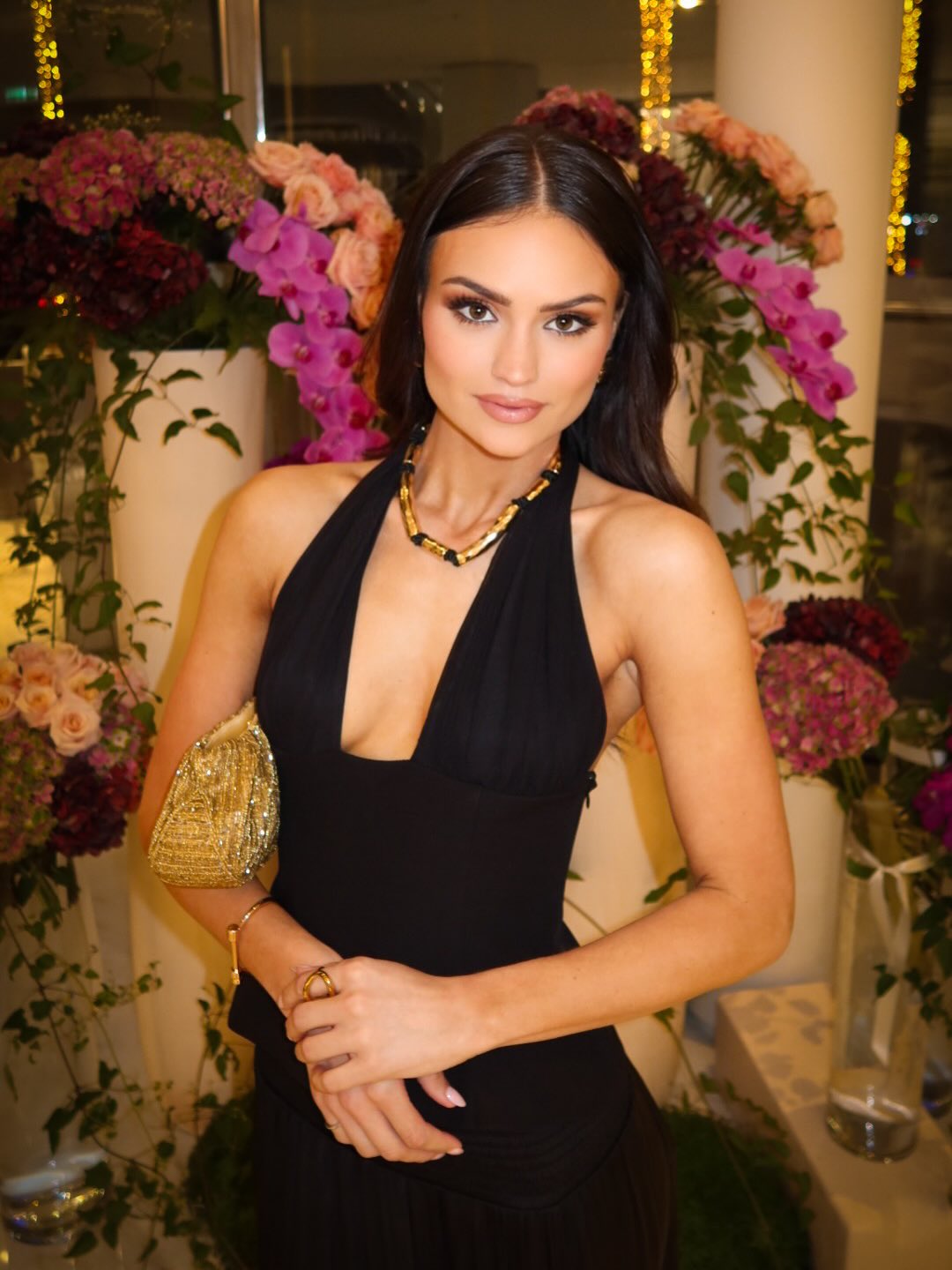
On color, the wardrobe wins by restraint. Navy reads serious without reading severe. Camel reads warm without reading casual. Cream and ivory flatter most skin tones under indoor lighting and tend to read better on the panel’s afternoon photographs. Black is the safest choice and also the easiest to disappear into a row of contestants. The dress that wins the interview is the one that lets the woman wearing it stand out, not the dress itself.
Pumps are the most underestimated category in the wardrobe. The pump that wins is the one that has been worn for two evenings before the interview, ideally on a rug at home and a pavement once outside. Nude tones extend the line of the leg. A clean black is the second-safest option. Earrings should be small enough to clear a cheek and structured enough to catch the light. Pearls remain a quiet favorite of judges who have sat on more panels than they care to count.
Related searches for pageant interview outfits
The accessory rules
The handbag is the smallest decision and the most often missed. A small structured top-handle in a tone that matches the shoes is the safe pick. A Polène Numéro Un Nano or a small Strathberry East West Mini reads polished without competing with the suit. Skip the soft hobo and the oversized tote. The interview lasts twenty minutes, the bag sits on the floor for nineteen of them, and it should photograph cleanly in the corner of every walk-in shot.
Hosiery has quietly returned. A sheer nude tone, twelve to fifteen denier, gives the leg a smoother finish under the panel lighting and prevents the small shifts of color that the camera will register but the room will not. Wolford and Falke remain the two brands that hold their tone across a long day. Avoid heavy opaque tights for the interview round. They flatten the line of the leg in a way that reads less elegant than the alternative.
A final word on hair. The interview rewards a face that the camera can read in detail. Hair off the cheekbones, off the collarbones, and out of the line of the earring. A low chignon, a clean side part, a soft pulled-back ponytail with a polished gloss are all reliably flattering. The dramatic blowout belongs to the evening gown. The interview wants the woman, not the styling.
IN THIS EDIT
- Blazers
- Sheath dresses
- Pumps
- Earrings
- Tailored separates